- Who Must Cut Branches That Hang Over a Property Line?
- What Does Georgia Law Say About Overhanging Branches?
- Who Is Responsible When a Tree Trunk Sits on the Property Line?
- What If the Overhanging Branches Are Dead or Dangerous?
- Who Is Responsible for Trees Along Columbus Streets and Sidewalks?
- What Should You Do Before Cutting Overhanging Branches?
- Why Hire Fortson Tree Company for Cutting Overhanging Tree Branches?
If a neighbor’s tree branches extend over your yard in Columbus, GA, you are generally responsible for trimming the portions that cross your property line. Georgia guidance allows this limited trimming, but you cannot trespass onto the neighbor’s land or damage the tree. If a tree is visibly dead, dying, or an imminent danger, the tree owner may be responsible for addressing the hazard. Trees on City property follow different rules.
Before cutting, identify the trunk’s location and whether the tree is private or public.
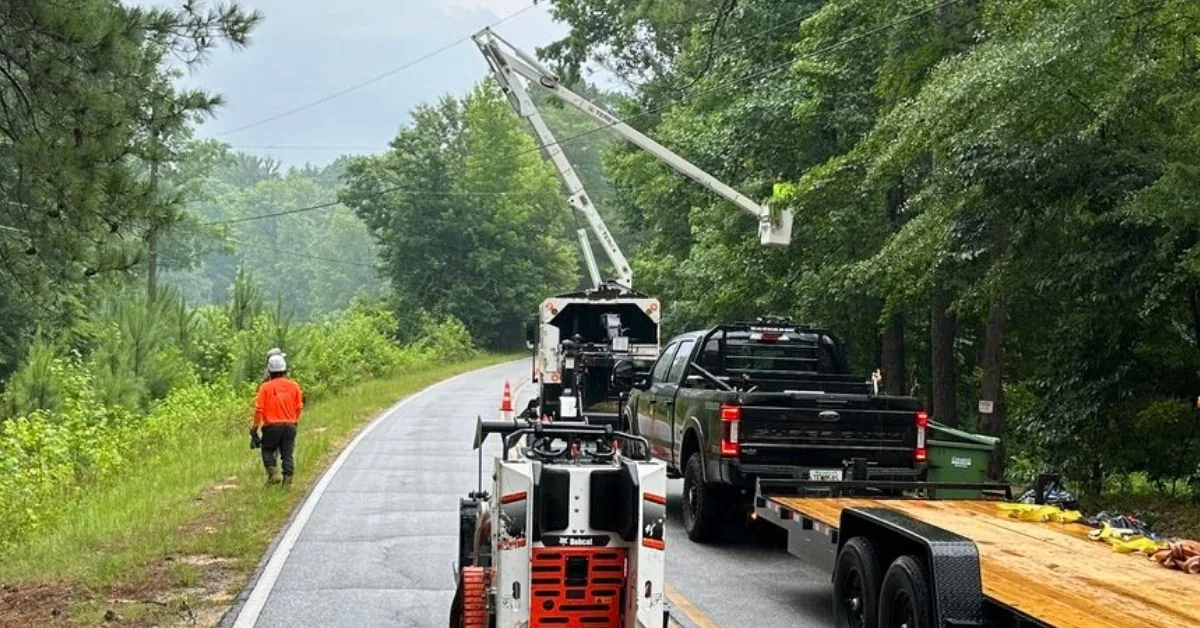
Who Must Cut Branches That Hang Over a Property Line?
In a private-property situation, the neighbor whose yard receives the overhanging branches can trim the portions that cross the property line. The tree owner does not automatically have to pay for routine trimming.
The Georgia Attorney General’s Consumer Protection Division guides that the person whose property is affected is generally responsible for trimming encroaching branches. You may trim only the portion over your land. You cannot enter your neighbor’s yard without permission, cut beyond the boundary, or damage or destabilize the tree. Talk with your neighbor first. Agree on the scope and cost in writing when the work is substantial.
What Does Georgia Law Say About Overhanging Branches?
Georgia recognizes a property owner’s right to trim branches that cross onto their land, but this is not permission to cut down or damage a neighbor’s tree. The work must stay on your side of the property line.
The Georgia Attorney General identifies an important exception: if a neighbor’s tree is visibly dead or dying or is in imminent danger of causing harm to people or property, the tree owner would likely be responsible for removing the hazard.
Warning signs may include –
- extensive decay
- fungal growth
- missing bark
- dead limbs, or
- a pronounced lean
Leaves, seeds, or small twigs do not automatically make a tree dangerous. Document serious concerns and seek professional or legal advice.
Who Is Responsible When a Tree Trunk Sits on the Property Line?
In Georgia, tree ownership is generally determined by the location of the trunk. If it stands entirely on one property, the tree belongs to that property owner. If the trunk is directly on the boundary, the tree may be jointly owned. A fence may not mark the legal boundary. Check your survey or consult a surveyor if ownership is unclear.
UGA Cooperative Extension recommends discussing boundary-tree work with neighbors and agreeing on a plan before hiring a tree service.
What If the Overhanging Branches Are Dead or Dangerous?
Dead, cracked, or unstable branches need attention when they overhang homes, driveways, or walkways. A declining tree may need a full assessment. Georgia guidance indicates that a tree owner may be responsible when a tree is visibly dead, dying, or an imminent danger. Prior knowledge can also matter if the tree later falls and causes damage. UGA Extension explains that liability may depend on whether the owner knew, or reasonably should have known, the tree was dangerous.
Photograph serious defects from a safe location and notify the owner in writing. Keep records, avoid DIY work on heavy limbs, and keep people away from immediate hazards.
Who Is Responsible for Trees Along Columbus Streets and Sidewalks?
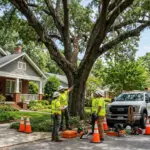
Trees in public spaces follow different rules from trees on neighboring private property. Columbus Public Works says the City maintains trees between the sidewalk and street when that area has been declared City property.
- Residents may not cut down a City-owned tree or hire a tree care company to remove it.
- If a public tree needs attention, contact Columbus 311 and submit a service request.
- An area that looks public may be a private easement. Columbus says easements are private property, so the property owner is responsible for a dead tree there.
- Ask the City if the boundary is unclear.
What Should You Do Before Cutting Overhanging Branches?
Before arranging trimming:
- Confirm the property line. Check a survey or property records instead of relying only on a fence.
- Identify tree ownership. The trunk’s location is the starting point; public trees require City guidance.
- Talk with your neighbor. Explain the concern and agree on the work where possible.
- Assess the risk. Photograph visible defects from a safe distance and seek professional advice for hazardous limbs.
- Hire a qualified tree service. Confirm insurance, the work area, and cleanup arrangements.
Do not cut large limbs without a plan. Heavy branches can fall unpredictably, and excessive pruning can harm the tree.
Why Hire Fortson Tree Company for Cutting Overhanging Tree Branches?
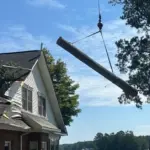
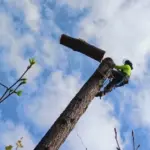
Fortson Tree Company brings 20+ years of combined experience in professional tree care, with the expertise and specialized equipment needed to handle overhanging branches safely. Our team offers crane-assisted removal capabilities, precision cutting techniques, and careful property protection
Fortson Tree Company maintains Tree Care Industry Association (TCIA) membership and accreditation and also holds an A+ rating from the Better Business Bureau (BBB) with hundreds of satisfied clients, which reflects our true commitment to quality. Our award-winning service, hundreds of satisfied clients, competitive pricing, price matching, and workmanship guarantee reflect our commitment to quality. We also take care to protect your property, surrounding structures, and landscaping.
We proudly serve Columbus, Fortson, Hamilton, LaGrange, West Point, Pine Mountain, and surrounding communities.