Concerned about a dangerous tree? Fortson Tree Company provides professional tree hazard assessment in Columbus and Harris County, GA. We identify visible warning signs and help you determine the right course of action. Whether you’re dealing with dead branches, trunk damage, or a tree that looks unstable, we’ll evaluate the concern and explain your options.
What Is a Tree Hazard Assessment?
A tree hazard assessment is an evaluation of a tree’s visible condition and potential risks to nearby people, buildings, vehicles, and other property. At Fortson Tree Company, we look for warning signs such as dead or hanging limbs, damaged trunks, visible decay, cracks, and leaning trees that may require attention.
A tree doesn’t have to be completely dead to become a hazard. Structural damage, weakened branches, and changes in its condition can create problems that aren’t always obvious from the ground. Our team helps identify these concerns and discusses the available options for addressing them.
Depending on what we find, the recommended work may include:
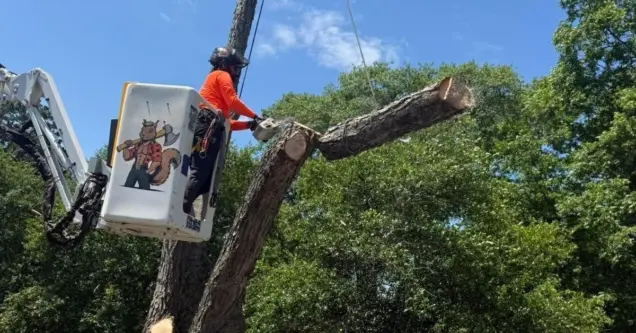
- Hazardous limb removal: Removing dead, damaged, or unstable branches that could fall.
- Tree pruning: Removing selected branches to address specific concerns and improve tree structure.
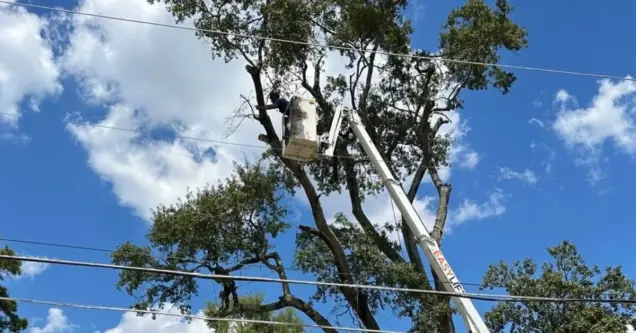
- Hazardous tree removal: Taking down trees that present significant risks to nearby structures or occupied areas.
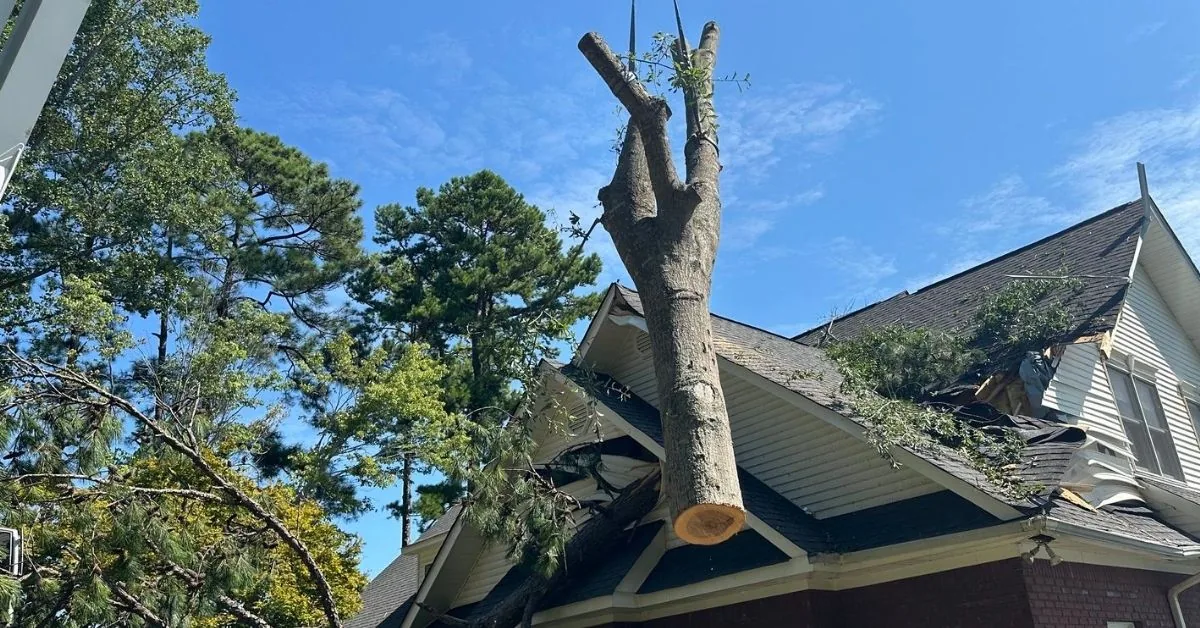
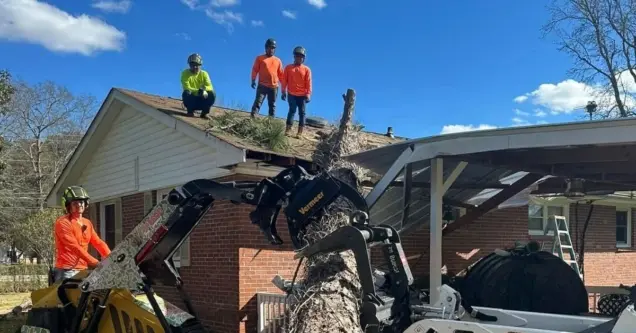
- Emergency tree services: Responding to urgent tree hazards caused by storms, fallen limbs, or sudden damage.
We’ll explain which tree services may be appropriate for your property before work begins.
What Warning Signs Mean a Tree May Be Hazardous?
Several visible signs can indicate that a tree needs a closer evaluation. Dead branches, cracks in the trunk, visible decay, and a noticeable lean are among the conditions we look for when assessing potentially hazardous trees.
Some problems develop gradually, while others become apparent after severe weather. If you notice any of the following around your property, contact our team for an assessment:
- Dead or Hanging Branches: Large dead branches can break away without much warning, particularly during strong winds or storms. Hanging limbs are also a concern because they may fall onto roofs, vehicles, walkways, or areas where people gather.
- Cracks or Splits in the Trunk: Visible cracks, splits, or separation in the trunk may indicate structural weakness. The location and severity of the damage help determine whether the tree needs additional attention or removal.
- Leaning or Unstable Trees: A tree that suddenly starts leaning or develops a change in its position may have problems with its roots or structural support. Freshly disturbed soil or exposed roots around the base can provide additional warning signs.
- Visible Decay or Cavities: Hollow areas, cavities, fungal growth, and decaying wood can indicate internal or external deterioration. These conditions may affect how well a tree supports its own weight.
- Storm-Damaged Limbs and Trees: Strong winds, lightning, and severe weather can leave trees with broken branches, split trunks, or damaged root systems. Our emergency tree services are available around the clock when storm damage creates an urgent hazard.