- 1. Initial Consultation and Tree Assessment
- 2. Selecting the Removal Method
- 3. Preparing the Work Area
- 4. Removing the Branches and Canopy
- 5. Cutting and Lowering the Trunk
- 6. Cutting Logs and Removing Debris
- 7. Stump Grinding and Removal
- 8. Final Cleanup and Property Review
- How Long Does Tree Removal Take?
Removing a tree involves more than cutting through its trunk. A professional job begins with an assessment, continues through site preparation and controlled cutting, and ends with debris removal and a property check. Each stage helps protect people, buildings, landscaping, and nearby trees.
In Columbus, GA, removal methods can vary because trees may stand close to houses, driveways, fences, utility lines, and neighboring properties. Knowing how the process works helps you prepare, ask informed questions, and understand what is included in the estimate. A clear plan also helps everyone know where crews will work and which areas must remain off-limits.
1. Initial Consultation and Tree Assessment
The process starts by discussing why the tree needs removal, such as decline, storm damage, structural problems, or planned construction. During the site assessment, the team considers the tree’s height, trunk diameter, condition, lean, canopy, and proximity to structures. They check access, nearby structures, other trees, and visible utility lines to determine a safe removal method. A trustworthy tree service in Harris County, GA, will offer free, no-obligation estimates and explains the available options before work begins. A written estimate keeps the agreed scope clear.
2. Selecting the Removal Method
If there is enough open ground and no nearby obstacle, a crew may be able to felled the tree in a planned direction. This approach is unsuitable when the tree could strike a home, road, fence, vehicle, or other property. In a confined area, professionals may dismantle the tree in sections.
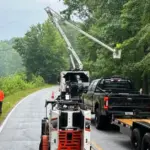
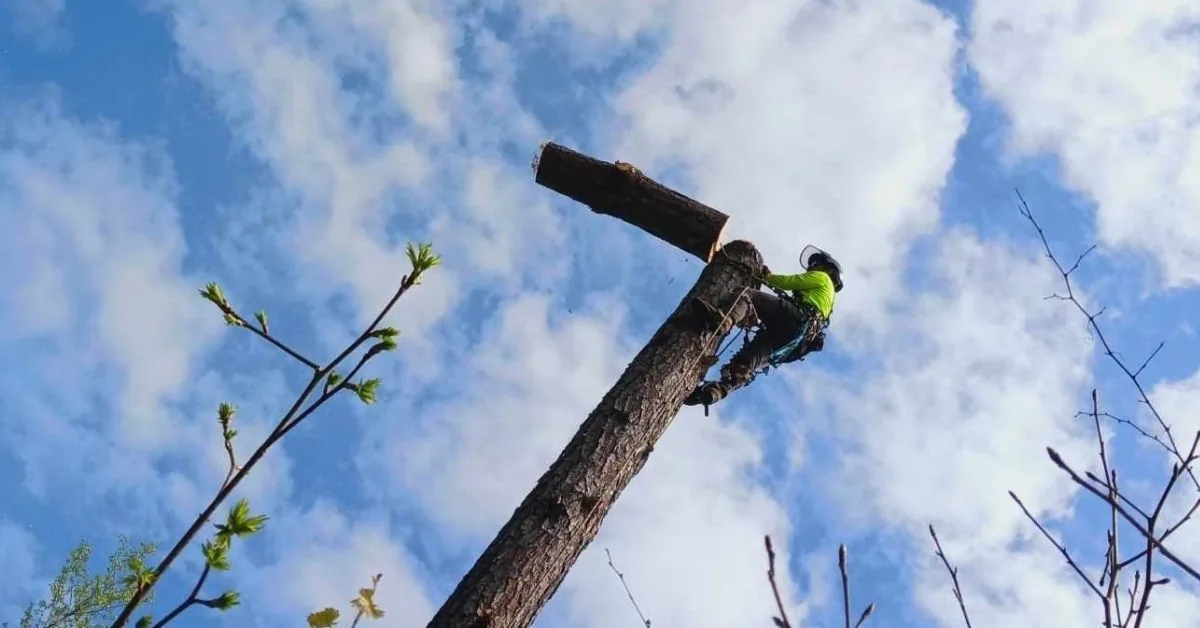
A climber or lift equipment accesses the canopy while ground workers manage branches. Larger pieces may be lowered with ropes or rigging rather than dropped. Crane-assisted removal may be considered for particularly difficult projects when the site allows safe crane access. The assessment determines the method.
3. Preparing the Work Area
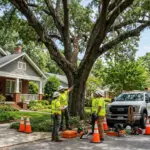
Before cutting starts, the crew establishes a controlled work zone. Move vehicles and outdoor belongings away from the tree. Keep children, visitors, and pets outside the work area.
The crew plans equipment access, drop zones, and staging areas while considering buildings, fences, sidewalks, landscaping, and nearby trees. Clear boundaries help reduce confusion and keep people away from active equipment. Never cut branches touching electrical lines. Contact the utility provider for guidance.
4. Removing the Branches and Canopy
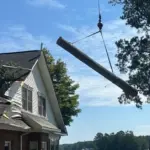
For sectional removal, the crew usually works through the canopy in a controlled sequence. Branches are cut into manageable pieces, with attention to their weight, position, and direction of movement. Ropes or rigging may be used to lower larger limbs safely when dropping them could damage the property.
The cutting worker and ground crew communicate throughout this stage. Everyone stays clear of suspended loads and falling material.
5. Cutting and Lowering the Trunk
Once the canopy is removed, the crew handles the remaining trunk. In an open area, it may be possible to fell the trunk in a controlled direction. Where space is restricted, professionals may cut it into shorter sections and lower them carefully.
The crew plans cuts and rigging around each section’s weight to protect buildings, fences, pavement, and nearby trees. Homeowners should stay outside the work zone and never try to guide falling sections. Tree removal should be left to trained professionals with suitable equipment.
6. Cutting Logs and Removing Debris
After the tree is down, the crew cuts the trunk and larger limbs into manageable pieces. Depending on the agreement, logs may be hauled away, left in specified lengths, or set aside for the homeowner. Smaller branches and brush are gathered for disposal.
7. Stump Grinding and Removal
Cutting down a tree usually leaves its stump in the ground unless stump work is included. A stump can interfere with mowing, landscaping, access, or future construction. It may also create a trip hazard.
Stump grinding uses specialized machinery to reduce the stump below ground level. Some roots remain underground and decay over time. Extraction removes more of the stump and roots and disturbs more soil. Choose based on how you plan to use the space.
8. Final Cleanup and Property Review
The crew gathers branches, wood pieces, and debris created during removal, then clears the agreed work area.
- Review the work before the crew leaves.
- Confirm the tree and debris are removed and access routes are clear.
- Ask whether holes, roots, or lawn repairs need attention.
How Long Does Tree Removal Take?
The schedule depends on tree size, condition, location, equipment access, weather, and the chosen removal method. A small tree in an open yard may take less time than a large tree close to a home or utility lines. Sectional dismantling, crane access, multiple trees, stump grinding, and hauling can extend the project.